
Exercise alone isn’t enough. Moving more, and with more variety between workouts, is essential if you want to feel good, be capable and confident and keep moving well for life. Some of the most powerful ways to support your body can be woven into everyday life if you know where to start. When we stop thinking of movement as something we must schedule and start seeing it as something we can sprinkle throughout the day, it becomes far more sustainable, enjoyable and even playful.
These are some of my favourite everyday movement opportunities from my book Move Well For Life, not in any specific order, as they are all equally important. They don’t require special equipment, extra time or perfect willpower. They are simply ways to help you move a little more, a little differently and in ways your body recognises and responds to. After all, our bodies adapt to what we ask of them.
Wendy Welpton’s Top 10 Everyday Movement Opportunities
The swaps below align with the Move Well Wheel, a framework from Wendy Welpton’s Move Well For Life:
M – Move More · O – Oppose Repetition · V – Vary Levels · I – Integrate Load · N – Nurture Joy · G – Get Outdoors
-
Sit on the floor (daily)
Instead of: always choosing the sofa or dining chair.
Try: sitting on the floor to read, scroll or watch TV.
Floor sitting naturally encourages regular position changes, like going from crossed legs to side-bent sitting and kneeling. Each shift gently moves your ankles, hips, knees and spine through different ranges, supporting mobility. You don’t need to do it for long; even a few minutes count. It also necessitates getting down and back up again, which builds strength and confidence. Different ways of sitting and getting up and down add new “words” to your body’s movement language. M, O, V
-
Get low and reach high often
Instead of: only living life at chair seat height and above.
Try: getting the centre of your body down low more often by putting something you use regularly in a low cupboard, or reaching up high onto tiptoes using a high cupboard (especially for something heavier to build upper body strength), and choosing to put your shopping on the floor rather than the kitchen counter to encourage you to get low. Repeatedly moving your body lower and higher supports mobility, strength, balance and coordination, all of which matter hugely as we age. M, O, V, I
-
Choose the harder route on purpose
Instead of: always choosing the most convenient or quickest method.
Try: parking further away, walking up the escalator, choosing the stairs, carrying baskets instead of pushing a trolley and pacing during phone calls instead of standing.
Start to notice where modern life quietly takes movement away and intentionally choose the better movement option. These small choices support health, strength and joint health over time. Make it a fun challenge, model the choice to others and acknowledge yourself afterwards for making a good choice for your body and your life, so you’re more likely to make it a habit. M, O, I, N
-
Balance where and whenever you can
Instead of: always standing with two legs ‘hip width’.
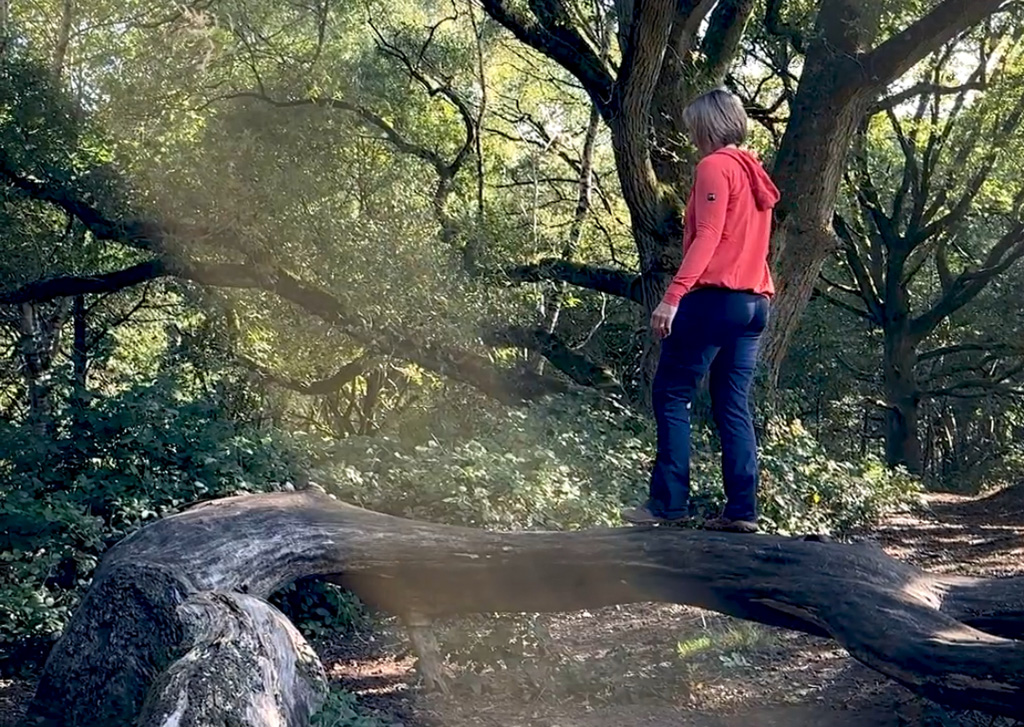
Try: balancing on one leg while waiting in a queue, dressing and putting on shoes, and finding things like fallen tree trunks to practice balancing on.
Balance practice isn’t just about preventing falls; it also keeps your nervous system sharp and responsive. These small balance challenges wake up muscles that often go unused in modern life. Keep it playful; wobbling is part of the learning process. M, O, N, G
-
Choose a different path outdoors
Instead of: staying upright and always on flat ground.
Try: choosing the uneven (rocky) ground, stepping over logs and under fallen trees instead of always going around.
Outdoor environments naturally invite movement variety. Uneven surfaces build foot and ankle strength, changes in height challenge leg strength and using natural obstacles supports hip and knee mobility. These movements reconnect us with how our bodies evolved to move, while also making movement feel more like a fun experience than a task on your to-do list. M, O, V, I, N, G
-
Turn chores into movement play
Instead of: rushing through household tasks, resenting the time they take.
Try: seeing how many shapes you can make with your body to pick things up, getting on a clean carpeted floor to sort the washing and moving with varied transitions between piles of washing.
Housework already involves bending, twisting and carrying. Embracing these movements, rather than minimising them, turns chores into practical, beneficial movement sessions. Forget perfect technique; it’s about letting your body move more freely and in more varied ways. M, O, V, I, N
-
Add in more real-life lifting
Instead of: avoiding opportunities to add load.
Try: carrying shopping bags further, lifting bags of compost rather than using a wheelbarrow, putting a weight on the bottom stair to take up with you and back down again.
Everyday lifting is one of the most natural ways to maintain strength. Carrying uneven loads, switching sides and adjusting grip all challenge the body in useful ways. Look for the opportunities life already provides to add load, or create some yourself. The key is awareness, not avoidance. M, O, I, G
-
Think hips, not spine
Instead of: always bending through the spine.
Try: reaching down or getting low by hinging at the hips and bending the knees
We often outsource the movement of our hips and knees to our spine. To keep the joints in our lower body strong and mobile, we need to use them actively and in varied ways. When you become aware of the movements you do on autopilot, it becomes clear why opposing repetition is so important. M, O, I

From Survival to Stagnation: Read an extract from Move Well For Life
-
Rethink your chair use
Instead of: sitting still for long periods in one position.
Try: active sitting: avoid leaning on the chair back, wriggle while sitting, vary your sitting positions, twist and move your legs, and lower into the seat with control.
Chairs are often demonised, but it’s how we choose to use them that can make a difference, and they’re not going anywhere, so let’s make them work with us. Changing shape regularly and moving more while seated helps reduce the effects of sedentarism. Monitoring your chair use and adding movement breaks as often as you can makes a real difference. M, O, I
-
Let play override social rules
Instead of: worrying how it looks.
Try: playing with kids in the playground, climbing rocks while out on a walk, creating games at home, dancing badly, but still dancing, for joy.
Playful movement often disappears not because our bodies can’t do it, but because we think we shouldn’t. Reclaiming play restores joy, curiosity and confidence. These movements don’t just strengthen the body; they change our relationship with movement altogether. M, O, N, G
Move Well For Life is published by Headline Home
From Survival to Stagnation: Read an extract from Move Well For Life
