

In your new book, How to Be Selfish, what do you mean by ‘selfish’, and why is listening to your inner compassionate voice a moral act rather than self-indulgence?
So many women I speak to voice feeling selfish when they pause to focus on self, such as when they’re resting – even after having spent the whole day tending to others – when they offer an opinion, say no or lean on others. None of these things are necessarily selfish; they are self-advocacy. In my book, I am encouraging people to reclaim the right to self: the right to have needs and feelings. It is an invitation to heal your relationship with yourself.
We are already skilled and diligent in our commitment to nurturing others. When we are learning how to take time for ourselves, the missing piece is allowing others to care for us, too, and yet so many people feel it is selfish to receive. This is the narrative I want to change with the book. When I talk about being selfish – you can think of it as SELF-ish – I mean knowing yourself, accepting yourself, respecting yourself, nurturing yourself and advocating for yourself, so that others can understand and tend to you too. This might feel radical in a world that champions resilience and applauds hyper-independence, but the truth is, people need people. We all need love and support, and allowing ourselves to receive it deepens our bonds because love that is trusted, valued and welcomed connects us more fully.
Tuning into your compassionate inner voice is a moral act because it allows a more flexible expression of your values of kindness, care and love, broadening them to include yourself too. If you behaved with others as you so often do in your relationship with yourself – think of the harsh words and critical tone, the denial of needs, the minimising or dismissing of emotions – you wouldn’t expect those people to stick around. Treating yourself with dignity and respect is not self-indulgence; it is the cornerstone of our health and longevity, and of the quality of our relationships with those we care about most.
If there were only one essential way to be selfish, what would it be, and why does everything else flow from that?
If we boil it down to one core skill, it would be self-compassion; this is the skill from which all nurturing action blooms. Self-compassion is the awareness of your own struggle, coupled with the motivation and the action to help yourself avoid it or alleviate it. It encompasses a tuning inward, a listening, an affirmation of worth to receive comfort, support and relief and action that is in our best interests. It is the gentle tending that allows us to meet our humanity, and when we get skilled at taking action at the whisper – why wait for the shout of illness, injury, conflict or burnout – we meet ourselves where we are without judgement, and that diligent resourcing allows us to show up in life as we aspire to, benefiting everyone our life touches.
If thinking well doesn’t mean eliminating negative thoughts, what does a healthy relationship with them look like?
I am so glad you asked this question! What’s important here is making the distinction between thoughts and self-talk. I am here to tell you it’s okay to let go of the idea of ‘positive thinking’… you might find that shocking, but stick with me. Thoughts just arrive in our head, generated without our choosing by our brain. If you don’t choose them, you don’t have control over them, and if you don’t have influence over them, it’s okay to stop trying to control them. A healthy relationship with your thoughts means understanding that all your thoughts are just passing experiences, knowing that not all thoughts are true, not all thoughts are facts, and that your thoughts are not necessarily predictions or prophecies. It’s okay to let all your thoughts come and go, staying anchored in the knowledge that you get to choose the thoughts you invest with meaning and your identity.
Where we do have control is our self-talk, and it is crucial that we learn to speak to ourselves in a supportive way. There is no room for punitive self-talk if we want a healthy relationship with ourselves.
For those unwanted thoughts that keep needling us, what works better than trying to get rid of them – remember, we can’t control them – is making peace with them. A practice that helps me acknowledge their presence without getting wrapped up in them is a deliberate noticing and releasing exercise. It’s called ‘dropping the rope’. Every time your brain generates an unwanted thought, rather than chastising yourself for having it, getting involved with it, or letting it trigger a cascade of unhelpful self-talk – which is like an endless, fruitless tug-of-war with the thought – realise that you can just drop the rope. I say to myself, “There you are again. I know you. I don’t have to listen to you,” and I drop the rope and bring myself back to something that serves me. This could be drinking a glass of water, taking an extra-long exhalation to soothe myself, or reaching out to a friend for support, because it is not about shouldering your burden alone. It’s okay if you have to ‘drop the rope’ 100 times a day! With practice, we become more skilled at directing our attention and feel less bothered by the presence of these thoughts. We also become more aware of the conditions that tend to generate unhelpful or toxic thinking, like too much screen time, hunger or stress.
How does caring for your nervous system and inner world change the way we show up in relationships, work and the wider world?
Caring for your nervous system and gently tending to your inner world allows us to heal, replenish and resource ourselves. Think of it as filling up your petrol tank and having your car serviced so you are fit for reliable travel. Being tender with ourselves, meeting our own needs, allowing others to meet our needs and sharing our emotional lives allows us to deal more effectively with the challenges that arise in our lives.
The simple act of soothing the nervous system helps us shift out of the stress response, in which more primitive parts of the brain are more active, making it harder to empathise with others. Moving into ‘rest and digest’ mode helps us be more compassionate and measured in our choices, benefiting not only our health but the health of our relationships and the communities we are embedded in. It helps us act in service of our values, so we can lead a purposeful, impactful life. Being resourced and supported helps you build a legacy you can be proud of.
When we embrace our own humanity, it encourages others to do the same. When we shame ourselves for feeling and needing, we tend to deny others the same rights, or we model for them that it’s not okay to feel and need. I see selflessness as a real barrier to authentic, meaningful connection. We can only truly be in relationship when we bring our full selves, and when we come together with purpose, this is when we can create social change.
What are cravings, compulsive habits and difficult emotions really trying to tell us and how can we respond without being controlled by them?
These are all signals that there is an underlying need crying out to be addressed. We can respond by getting curious and asking what unmet need lies beneath. Can we pause and dig a little deeper, and in taking action, find fresh ways to respond to these signals? Is there a more life-giving way we can address the need? Can we comfort ourselves without sabotage? Can we identify a different action that we can switch for an undesirable habit? Can we ask what messages difficult emotions hold, without shaming ourselves for their presence?

Suzy Reading is a chartered psychologist and author known for her work on self-care, rest and compassionate living
How can we live by our own values and at our own rhythm when the world constantly demands attention, urgency and measures our worth by productivity?
Let’s acknowledge how truly challenging it is to pace ourselves with compassion, when the timetable of modern life is largely unbending, but we don’t have to keep assessing our worth according to these conditioned measuring sticks. Our value as a human being is untouched by how much we’ve done, how many emails we’ve sent or how incessantly busy we keep ourselves.
Let me leave you with this beautiful act of rebellion: turning your attention inwards and choosing yourself. Every time you take a drink, place a hand on your heart and let this gesture be an affirmation of your worth: I am here, therefore I am worthy. Feel it ground you in your body and bring you back to this moment, knowing you are deserving of this tenderness. Take a sip and notice how it heightens the sensory experience of drinking.
Couple this ritual with these questions: Where am I at, what do I need and what matters to me? Come home to self, honour self; it is time to start living like you matter too.
- Explore Suzy Reading’s guide to responding to self-doubt and your inner critic with compassion
- Read a review of Suzy Reading’s Rest to Reset – Permission to Pause
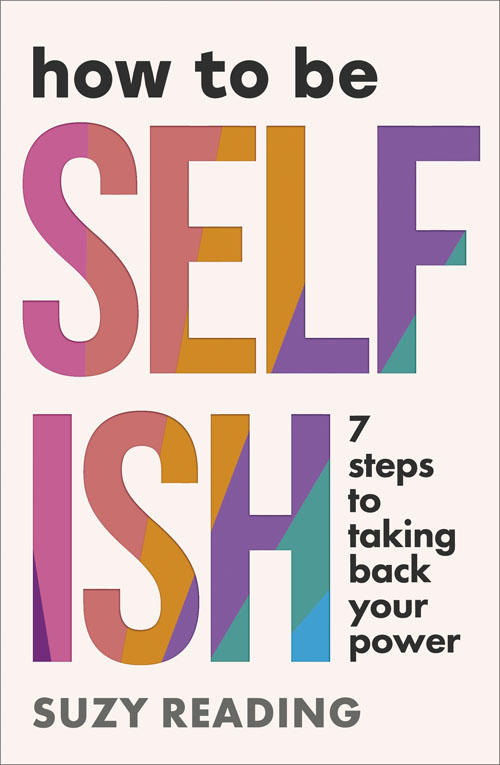
How to Be Selfish challenges the idea that self-care is indulgent, offering a more compassionate way forward. Visit Suzy Reading’s website for more on her work and books.
Lead picture credit: Brett Jordan on Unsplash
